Medical Negligence Claims: When Medical Care Falls Short, We Step In.
Clinical negligence causes real, lasting harm. If a healthcare professional’s failure caused you to suffer - whether through a missed diagnosis, a surgical error, or inadequate treatment - you may be entitled to compensationMedical Claim Direct is a specialist medical negligence service helping people across England and Wales claim compensation when healthcare falls short. Whether you have suffered harm through a misdiagnosis, a surgical error, dental treatment, a cosmetic procedure, or failures in women's or maternity care - our specialist team is ready to help. Every claim is handled on a no win, no fee basis, so there is no financial risk to you.
★★★★
4.7 ★ on Google
NJS Law
NO WIN, NO FEE
No hidden costs
FREE ASSESSMENT
No obligation
SRA
Authorised & Regulated
What counts as medical negligence?
Medical negligence - sometimes called clinical negligence - happens when a healthcare professional or institution provides care that falls below the standard you are legally entitled to expect, and that failure directly causes you harm.
It applies equally to NHS and private providers, and to every part of the system: hospital consultants, GPs, surgeons, dentists, midwives, pharmacists and cosmetic practitioners. What matters it not who treated you, but whether the care met the standard and what happened as a result.
What you need to prove
Not every disappointing outcome is negligence. Medicine carries risk, and treatment can fail without anyone having done anything wrong.
Two things have to be established.
Breach of duty
Every healthcare professional owes you a duty to provide care of a reasonable standard. The legal test ask whether the care you received would be supported by a responsible body of other practitioners in the same field.
It is not about whether a better doctor might have done more. It is about whether the care fell below the minimum standard the law expects.
Causation
This is where most claims are won or lost. It is not enough to show that care was substandard. You have to show that it caused your injury, or made an existing condition materially worse.
A delayed cancer diagnosis only founds a claim if the delay changed something: a treatment that would have worked, a stage that would have been earlier, an outcome that would have been better.
We investigate both points using independent medical experts before advising you. That is why we never tell anyone their claim is certain on a first phone call. What we can tell you quickly is whether it is worth investigating.
COULD YOU CLAIM?
Signs you may have a claim
You do not need to be certain before speaking to us. If any of these feel familiar, it is worth a free, confidential conversation.
Your condition was diagnosed late or missed altogether
A timely diagnosis can be the difference between effective treatment and lasting harm. If your condition was not identified when it should have been, we can assess whether negligence played a part.
You suffered complications that feel avoidable
Not all complications are negligence but some are. If your recovery was significantly worse than expected and you were not adequately warned or cared for, there may be a case to answer.
A GP failed to refer you or dismissed your symptoms
Being repeatedly told your symptoms are minor, or failing to be referred to a specialist when you should have been, can constitute clinical negligence when harm results.
TYPES OF CLINICAL NEGLIGENCE
We Handle All Forms of Medical & Clinical Error
●
Misdiagnosis & delayed diagnosis
●
Surgical errors & complications
●
GP negligence & missed referrals
●
Hospital-acquired infections
●
Anaesthetic & medication errors
●
Cancer misdiagnosis or delayed referral
●
Failure to obtain informed consent
You were not properly informed before a procedure
You have a legal right to be fully informed of the risks before consenting to treatment. If a material risk was not disclosed and you would have chosen differently, this may ground a claim.
Something was admitted, but nothing changed
An apology or an incident report is not compensation. Providers owe you a duty of candour, but that duty does not put right what the negligence has cost you.
You are still suffering - physically or financially
Ongoing pain, disability, loss of earnings, care costs and psychological harm are all compensable. Even if the original treatment was some time ago, you may still be within the time limit.
We handle all forms of medical and clinical error
If your situation is not listed here, it does not mean you have no claim. Call us and ask.
Misdiagnosis and delayed diagnosis
Cancer misdiagnosis or delayed referral
Surgical errors and complications
Failure to obtain informed consent
GP negligence and missed referrals
Dental negligence
NHS negligence
Hospital-acquired infections
Cosmetic negligence
Private healthcare negligence
Anaesthetic and medication errors
Women’s health and maternity
Consent: your right to know the risks
Before you agree to any procedure, you are entitled to be told the material risks and any reasonable alternatives, including the option of doing nothing.
✓ Risks left out of the discussion entirely
✓ Information given in language you could not reasonably follow
✓ Forms signed moments before surgery, with no chance to ask questions
✓ Consent obtained after sedation had already begun
✓ Alternative treatments never mentioned
✓ No opportunity to reconsider between consultation and procedure
Standard adult claim
Indicative ranges only. Every claim is valued individually on its own medical evidence and financial losses.
INJURY / CLAIM TYPE
Child or minor at time of negligence
Lack of mental capacity
Fatal medical negligence
Special damages
The injury itself
● Loss of earnings, past and future
● Pension losses
● Private treatment and rehabilitation
● Prescriptions, mobility aids, equipment
● Care and assistance, including unpaid family care
● Home or vehicle adaptations
● Travel to appointments, childcare, domestic help
3 years
Until 21st birthday
3 years
What compensation covers
Compensation is made up of two distinct parts, calculated in completely different ways. The aim is to put you back, as far as money can, in the position you would have been in had the negligence not happened.
General damages
The injury itself
Pain, suffering and loss of amenity: the physical injury, the psychological impact, and the things you can no longer do.
INDICATIVE RANGE
| Minor clinical injury, full recovery | Up to £5,000 |
| Moderate injury, partial recovery | £5,000 - £25,000 |
| Serious injury, lasting impact | £25,000 - £100,000 |
| Severe / life-changing harm | £100,000 - £500,000+ |
| Catastrophic / brain / spinal injury | £500,000 to £1m+ |
How long do you have to claim?
You generally have three years, running from the negligence itself or from the date you realised it had caused you harm. That second date is often much later than people expect.
Type of Claim
Limitation Period
Notes
From the date of negligence or date of knowledge
3 years from turning 18
No fixed limit
Suspended until capacity is regained
From date of death or date of knowledge
Who can bring a claim
● On your own behalf
Anyone aged 18 or over with capacity can bring their own claim.
● For someone who lacks capacity
Where brain injury, dementia or another condition prevents someone conducting their own claim, a family member or deputy can act as a litigation friend.
What to gather before you call
✓ A rough timeline of what happened and when
✓ Names of the hospitals, practices or clinics involved
✓ Any correspondence, discharge summaries or test results you hold
● For a child
A parent or guardian can act as a litigation fiend at any point before the child turns 18.
You do not need any of this to speak to us. It simply helps us give you a clearer answer sooner.
● After a death
The personal representative of the estate can claim for the losses suffered before death, funeral expenses and financial dependency.
✓ Details of any complaint you have made, and the response
✓ What the treatment has cost you so far, including time off work
✓ Nothing at all, if that is where you are. We can obtain your records for you.
Find out where you stand, today.
A short, confidential conversation with a specialist. We will tell you honestly whether your claim is worth investigating, and what happens next if it is.
Meet the Team
-
![A woman with blonde hair wearing a colorful patterned dress, standing in front of a white wall with partial text.]()
Leanne Henton
SOLICITOR / HEAD OF PERSONAL INJURY
-
![A man with glasses, a beard, and dark hair wearing a blue suit, white shirt, and an orange patterned tie, smiling in front of a wall with the partially visible word 'Microsoft' and colorful icons.]()
Richard Shillcock
SOLICITOR
-
![A man with a beard wearing a blue blazer and white shirt, smiling in front of a wall with abstract logo designs.]()
Barry Radford
SOLICITOR
-
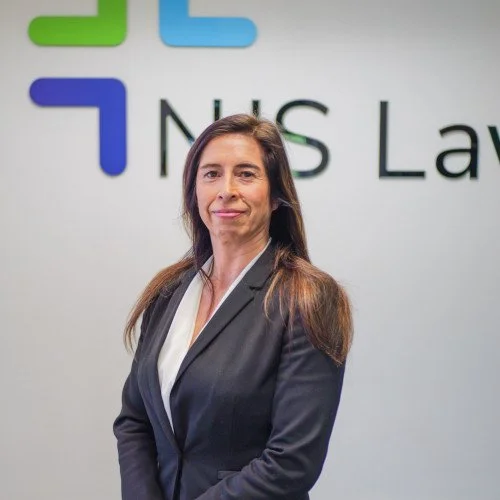
![A woman in a business suit standing in front of a wall with a logo and the text 'NHS Law'.]()
Ericka Genge
LITIGATOR
-
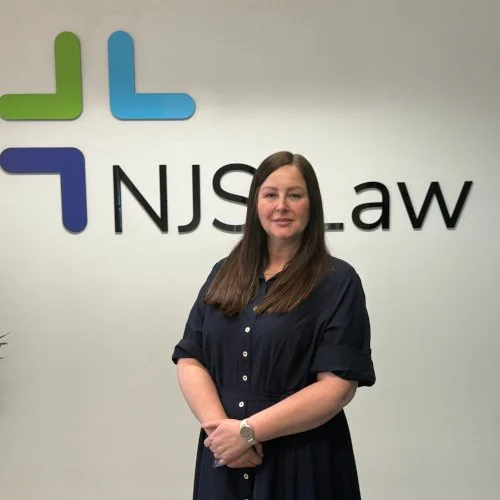
![A woman standing in front of a white wall with the logo and text 'NJS Law' on it.]()
Charlotte Crawshaw
LITIGATOR