
Lens Opacification vs PCO (Secondary Cataract) How To Tell Them Apart
You had cataract or lens replacement surgery to see clearly again. So when your vision starts turning blurry, foggy or "milky" afterwards, it's natural to feel worried and want answers.
Two explanations come up again and again:
• Posterior capsule opacification (PCO), often called a "secondary cataract"
• Intraocular lens (IOL) opacification, where the artificial lens implanted in your eye becomes cloudy
This guide explains how they differ in everyday language and gives you practical questions to take to your next eye appointment.
Please note: this guide is general information, not medical advice. Get urgent medical help if you have severe eye pain, sudden loss of vision, new flashes or floaters, or a red and painful eye.
Why can vision become cloudy again after cataract surgery?
Most people expect sharper sight after cataract or lens replacement surgery, so it can be alarming when things start to look hazy again. Several different conditions cause similar symptoms, which is why a thorough examination and the right diagnosis matter so much.
PCO and IOL opacification are two of the causes people ask about most.
What is posterior capsule opacification (PCO)?
During cataract and lens replacement surgery, your natural lens is removed but a thin, clear membrane called the posterior capsule is normally left behind. Your new artificial lens sits within this capsule, which holds it in place.
In some people, cells grow across the capsule over time and it turns cloudy. That is posterior capsule opacification.
Common symptoms of PCO
• Vision that looks blurred, misty or cloudy
• Glare, or halos around lights
• Duller colours, or less contrast between light and dark
Is PCO really a "secondary cataract"?
Not quite, despite the name. Your cataract hasn't grown back. Instead, the capsule supporting your new lens has become hazy. PCO is a well-known, common development after surgery and can appear months or even years later.
How is PCO usually treated?
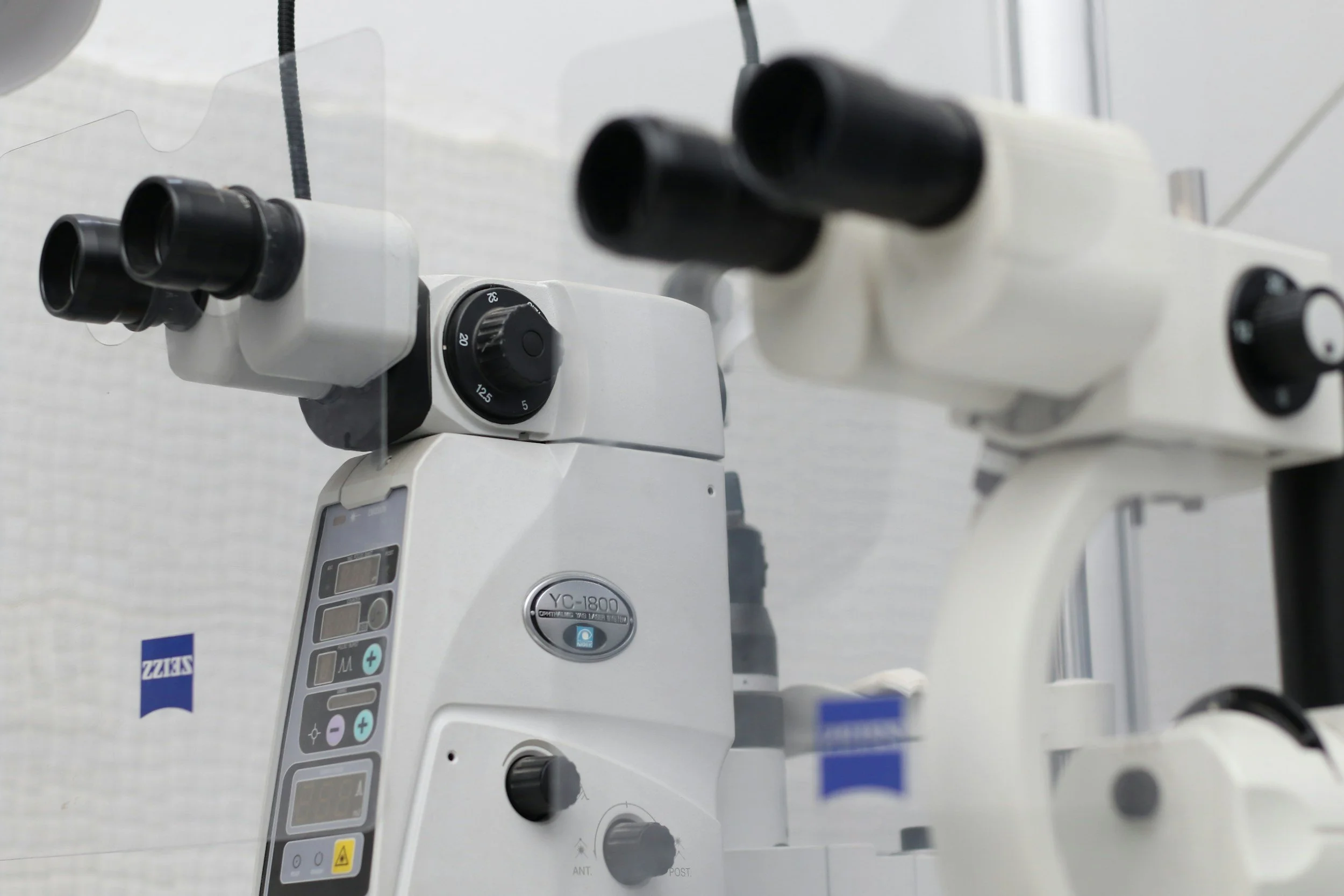
The standard treatment for PCO is a quick outpatient laser procedure called a YAG laser capsulotomy.
What happens during a YAG laser capsulotomy
The eye specialist uses a laser to make a small opening in the centre of the cloudy capsule. Light can then pass straight through to the back of the eye, and vision usually improves. It's normally quick and painless, though like any procedure it carries some small risks, which your clinician should explain to you.
Is YAG laser treatment always the right option?
No. Whether it's suitable depends on what your eye examination shows and your individual situation. Some causes of cloudy vision after surgery won't improve with a YAG laser, so it's important to be confident about the diagnosis first.
What is IOL (intraocular lens) opacification?
IOL opacification means the artificial lens itself has become cloudy, rather than the capsule behind it. It's a different problem from PCO, even though the two can feel very similar.
Symptoms of a clouding intraocular lens
• Sharpness of vision slowly getting worse
• A haze that new glasses don't fix
• Glare or halos, especially when driving at night
• Struggling to read or see clearly in certain kinds of light
Why getting the diagnosis right matters
Several other eye conditions can mimic these symptoms. A careful assessment helps make sure the real cause is found, so the most suitable treatment can be considered.
PCO vs lens opacification: why the difference matters
The two can feel the same to you as a patient, but they're separate problems and may need different management.
PCO (secondary cataract)
IOL opacification
What turns cloudy
How common
Typical first treatment
Does a YAG laser fix it?
The capsule behind the artificial lens
A common development after surgery
YAG laser capsulotomy
Usually
How treatment options differ
The artificial lens itself
Much less common
Monitoring, further tests, referral, or discussion of a lens exchange
Generally not
• PCO is often treated with a YAG laser capsulotomy.
• Problems with the lens itself, or other causes, may need monitoring, more investigations, referral to a specialist or, in some cases, a conversation about exchanging the lens.
Still not getting clear answers about your vision? We can help you work out what to do next.
What to ask at your eye review appointment
Writing your questions down beforehand can help you leave with the answers you need.
Questions about your diagnosis
✓ Is my blurred vision caused by PCO, by the lens clouding, or by something else?
✓ What did the examination show that points to that answer?
Questions about treatment and what happens next
✓ Would a YAG laser help me, and why do you think so?
✓ If there's any chance the lens itself is clouding, should that be ruled out before a YAG laser is used?
✓ If YAG isn't suitable, or doesn't work, what would the next step be?
✓ Which make and model of lens was implanted in my eye?
✓ If a lens exchange is mentioned, what are the risks and likely results for someone like me?
✓ Which symptoms mean I should seek urgent help?
How to request your eye surgery records
If you're unsure about your diagnosis or your options, you're entitled to ask for copies of your medical records.
Records worth asking for
• Details of the implant, including the lens model and any serial or batch number recorded
• Follow-up notes and test results, such as visual acuity, refraction and scans
• Copies of letters about the advice you were given and your treatment plan
Is it OK to ask for my records?
Yes. Asking for your records isn't an accusation against your surgeon or optometrist. It's a sensible way to understand your own care and make informed choices about what happens next.
When should you get legal advice about cloudy vision?
If your concerns remain after a proper assessment and a look through your records, legal advice may help.
Concerns where legal advice may help
• Whether the risks of surgery, and the alternatives, were properly explained to you
• Whether your follow-up appointments and tests were appropriate
• How your ongoing symptoms or complaints were dealt with
Every potential claim depends on its own facts, the medical evidence and the opinion of an independent expert.
-
No. Once your natural lens is removed, the cataract can't return. Cloudy vision afterwards is often caused by PCO, where the capsule behind the new lens turns hazy, or less commonly by clouding of the artificial lens itself.
-
PCO can appear anywhere from a few months to several years after surgery.
-
Generally not. A YAG laser clears a cloudy capsule, but it doesn't clear an artificial lens that has turned opaque. That's why an accurate diagnosis matters before treatment.
Talk to our team
If you have cloudy or reduced vision after cataract or lens replacement surgery and want to know your options, talk to us. We'll look at what happened and explain your next steps, with your case handled by our specialist team.